


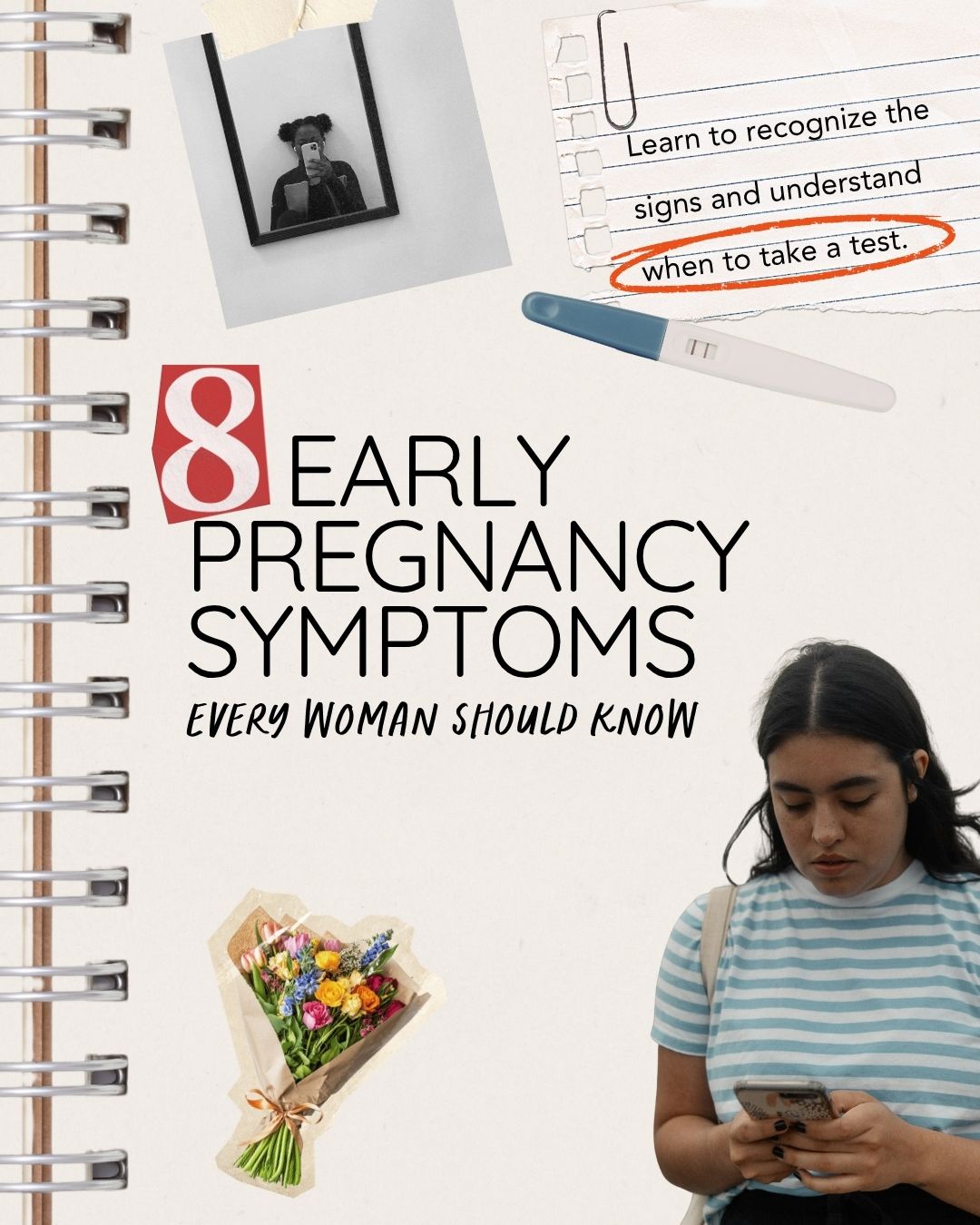
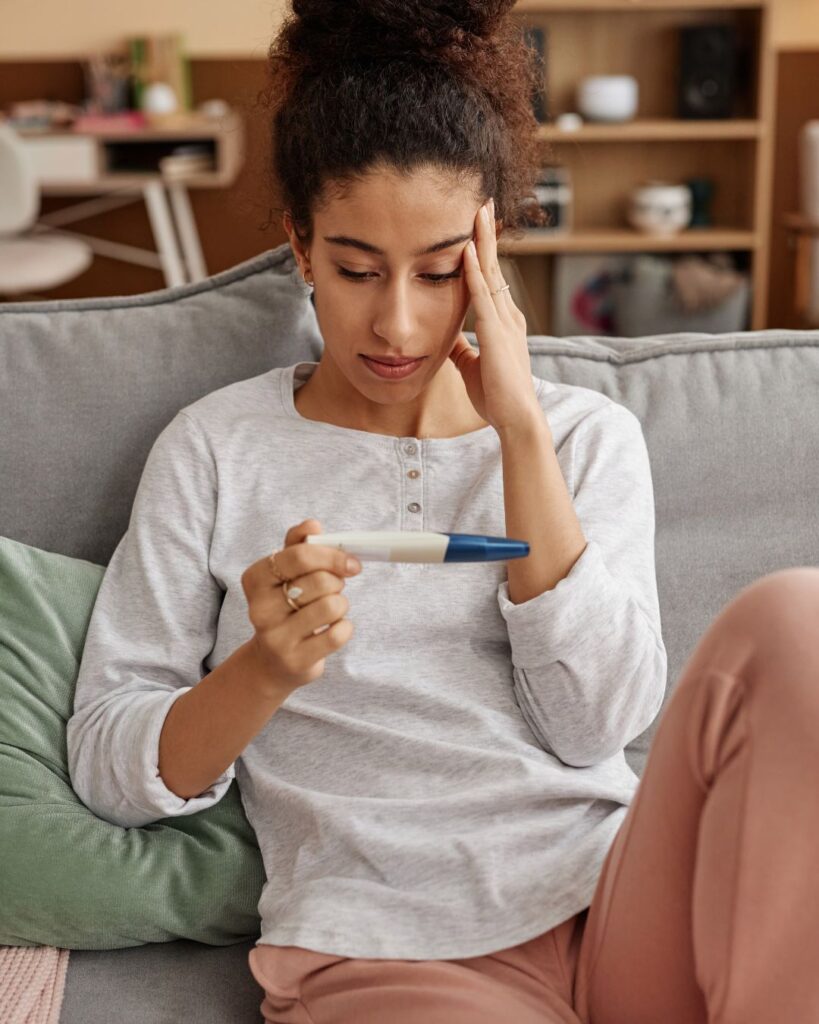
Whether you’re trying to get pregnant or hoping not to be pregnant, the weeks leading up to your period can turn you into a bonafide Sherlock Holmes, examining and questioning every symptom that arises. In this blog post, we’ll go over some of the earliest symptoms of pregnancy before you’ve missed a period and what to do if you think you’re pregnant.
What causes early pregnancy symptoms?
Soon after conception, your body begins to produce new hormones in earnest, preparing to house the rapidly growing blasocyst. These hormones include human chorionic gonadotropic (hCG), progesterone, and estrogen. Each of these hormones can be responsible for a variety of symptoms.
Human Chorionic Gonadotropoic Hormone (hCG)
Human Chorionic Gonadotrophic Hormone (or hCG), the hormone detected in pregnancy tests, begins production shortly after the embryo attaches to (implants) the uterine wall. Pregnancy tests are able to detect hCG roughly 12-15 days after implantation, but depending on the timing of ovulation and how quickly your body produces hCG, you may get a false negative.
Progesterone
Progesterone works to thicken your uterine lining to support the fertilized egg. During your normal menstrual cycle, the level decreases once it is determined that conception did not occur and signals to your body to break down the uterine lining. If you conceive, progesterone levels continue to increase and are essential for establishing the placenta and supporting the pregnancy. It also stimulates the growth of breast tissue.
Estrogen
During the course of pregnancy, women will produce more estrogen than they would over the course of the rest of their lives. Estrogen helps to develop the placenta, the development of organs in the fetus, helps the uterus to grow, regulates other necessary hormones, and more. During a woman’s regular menstrual cycle, estrogen can fluctuate between 20-400 pg/mL, and during the first trimester this elevates to a range over 188-2497 pg/mL – or in layman’s terms, an increase of nearly 650%!
How Early Can Pregnancy Symptoms Start?
You can start experiencing symptoms of pregnancy very early on, for some women symptoms can start as soon as a few days after conception. For most women, symptoms begin in earnest approximately 4 to 6 weeks pregnant, or 2-4 weeks after a missed period.

Common Early Pregnancy Symptoms
1. Implantation Bleeding
Implantation Bleeding happens in about 25% of women and happens when the blastocyst is implanted in your uterus, causing some disruption in the uterine lining.This is light in color and in duration, often looking like very light pink spotting.
2. Breast Tenderness and Changes
For nearly 17% of women, breast tenderness is one of the earliest signs of pregnancy and is due to the increase in estrogen. Tender or swollen breasts can appear as soon as 2-3 days after conception.
3. Nausea and Morning Sickness
Nausea and/or vomiting happens to approximately 80% of women during the first trimester. For some, it will happen very early on, while for most the nausea peaks around 8 weeks and lasts through approximately 12 weeks. The exact cause for this is not known, though some studies have shown elevated estrogen levels and hCG. It has also been suggested that women who experience worse nausea and vomiting (the most extreme cases called hyperemesis) have suppressed TSH levels.
4. Headaches
Unfortunately, headaches in early pregnancy can be caused by several different factors. Hormonal shifts, increased blood volume, and sinus congestion caused by the increased blood flow to the nasal passages can all cause headaches in early pregnancy.
5. Increased Urination
During pregnancy, the amount of blood that your body produces is on the rise, with the total blood volume becoming 30-40% higher by the 9th week of pregnancy and increases to 40-50% by the end of pregnancy. A higher blood level leads to more fluid processing by the kidneys, more pee produced, and in turn, more trips to the bathroom.
6. Fatigue and Tiredness
The increase in progesterone that occurs in early pregnancy, while supporting the pregnancy, can also slow down your body’s normal metabolic process and your body takes more energy to digest food. Since your body takes more energy to digest its food, it can cause you to be fatigued and/or tired as there is less energy to go around.
7. Nosebleeds
The blood vessels in your nose are very delicate and break easily, and with the increased blood volume that’s happening, they’re under increased pressure. Because of this, you’re more likely to experience a nosebleed.
8. Food Aversions and Acute Sense of Smell
The hormonal changes happening can cause you to be more sensitive to smell and change how you taste your food. Some smells (like the refrigerator) that don’t normally bother you may all of the sudden be repulsive.
This is not an exhaustive list ...
Other early pregnancy symptoms can include:
- Bloating
- Cramping
- Backache
- vaginal discharge
- Constipation
- mood swings
- shortness of breath
- Heartburn
- Acne
Please keep in mind that while each of these could be symptoms of pregnancy, they are not a diagnosis of pregnancy. Additionally, symptoms can vary greatly from woman to woman and even from one pregnancy to another.
Understanding the Differences between Early Pregnancy and PMS
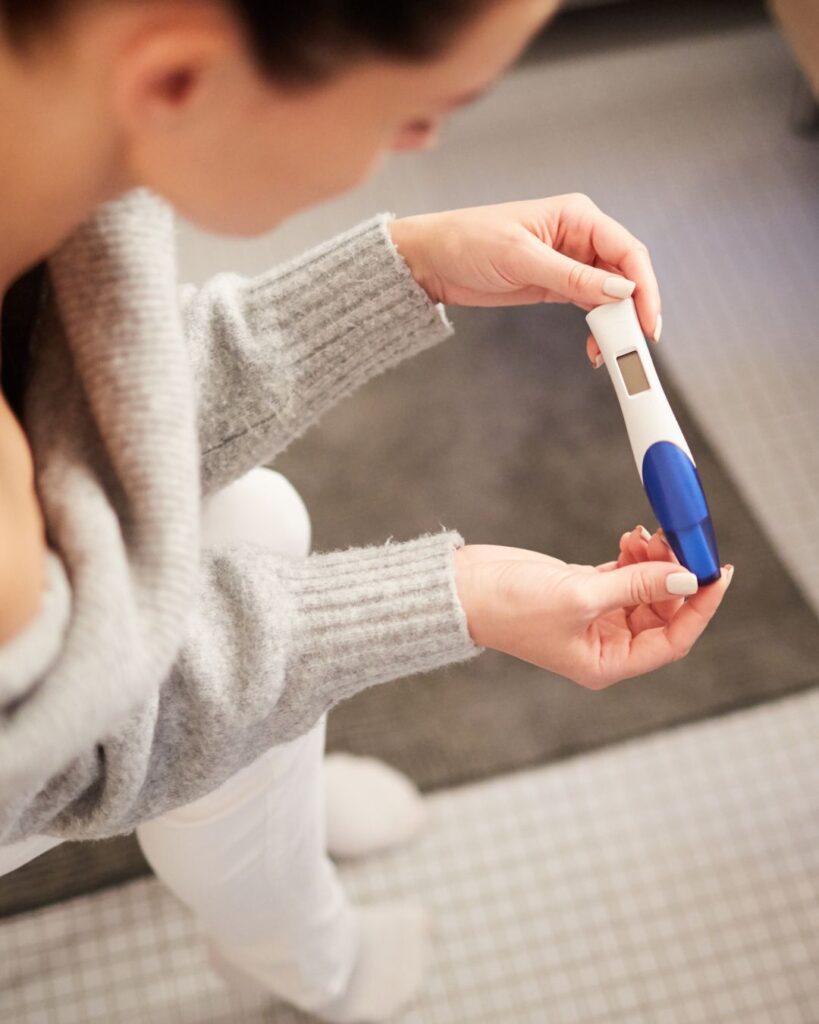
It’s important to note that many early pregnancy symptoms can also mimic symptoms of PMS, and early pregnancy isn’t diagnosed based on symptoms alone. Once your expected period has neglected to show, a pregnancy test is generally considered to be reliable, though as we’ll cover below, for some women it can take longer to test positive.
When to Take a Pregnancy Test
The general rule of thumb is to take a pregnancy test on the first day of your missed period. However, the FDA has noted that the results on this day may not be accurate for up to 10-20% of people depending on the speed at which their body is producing hCG.
If your pregnancy test is negative but you continue to feel symptoms of pregnancy, wait a few days and then take another test, as hCG levels rise rapidly in early pregnancy. You can also contact your doctor for a blood pregnancy test or contact Alpha Center for a urine test.
What if my pregnancy is unplanned?
- If you’re wondering if you’re pregnant and this wasn’t planned, it can understandably cause anxiety! Remember that you’re not alone and nearly 50% of pregnancies are unplanned.
- If you’re between the stage of decoding symptoms and taking a pregnancy test, try not to stress too much and consider whether or not your symptoms could mean something else.
- If you have had a positive pregnancy test and are considering your options for pregnancy, consider a pre-abortion screening with Alpha Center. At this appointment, you’ll learn if you’re actually pregnant, if the pregnancy is viable, how far along you are, and information about your options. At Alpha Center, we believe that an informed decision is the best decision. And because all of our appointments are free, we have no financial interest in your decision. Call us at 970.239.2272.
Conclusion: Recognizing Early Pregnancy Signs
Trying to figure out whether or not you’re pregnant before you miss your period can be maddening, but ultimately, the only thing that can confirm pregnancy is a positive pregnancy test.
If your pregnancy test is negative but you continue to feel symptoms of pregnancy, wait a few days and then take another test, as hCG levels rise rapidly in early pregnancy. You can also contact your doctor for a blood pregnancy test or contact Alpha Center for a urine test.
meta description:
Discover the 8 common early pregnancy symptoms that every woman should know. Learn to recognize signs and understand when to take a test.
FAQ: early pregnancy symptoms
How soon after conception can I start feeling symptoms?
Every woman’s body is different. While many women don’t notice changes until 4 to 6 weeks of pregnancy (2-4 weeks after a missed period), some may experience symptoms like breast tenderness or fatigue as early as 2 to 3 days after conception due to rapid hormonal shifts.
Is it implantation bleeding or just my period starting?
Implantation bleeding occurs in about 25% of women when the embryo attaches to the uterine wall. You can usually tell the difference because implantation bleeding is:
- Lighter in color: Usually light pink or brown, rather than bright red.
- Shorter in duration: It typically only lasts for a few hours to a couple of days.
Very light flow: It is usually just spotting rather than a flow that requires a pad or tampon.
Why do I feel so tired in early pregnancy?
Exhaustion is one of the most common early signs. It is primarily caused by an increase in progesterone, which slows down your metabolic process. Your body is also working overtime to increase blood volume and develop the placenta, which leaves less energy for your daily activities.
Can I have pregnancy symptoms and still get a negative test?
Yes. This could be a “false negative.” False negatives happen because pregnancy tests measure the hormone hCG, which may not be high enough to detect in your urine yet—even if you are feeling symptoms and are indeed pregnant. If you still feel pregnant after a negative result, wait a few days and test again, or contact a medical professional for a blood test.
Your pregnancy symptoms could also be PMS. Contact your doctor if you continue to have symptoms and miss your period as this could be an indication of pregnancy rather than PMS.
Why are my pregnancy symptoms so similar to PMS?
The hormones responsible for your period (like progesterone) are the same ones that rise during early pregnancy. This is why symptoms like bloating, breast tenderness, mood swings, and cramping are common to both. The only way to definitively tell the difference is to wait for your period or take a pregnancy test.
When is the best time to take a pregnancy test for accuracy?
For the most reliable result, wait until the first day of your missed period. You can also visit your doctor for a blood pregnancy test, which is able to measure your levels of HCG at a much lower threshold.
What should I do if I think I'm pregnant but wasn't planning to be?
First, take a deep breath—you aren’t alone. If you have a positive test or are experiencing symptoms, your next step is to confirm the pregnancy’s viability and how far along you are. You can schedule a free pre-abortion screening or pregnancy testing appointment at Alpha Center to discuss your options in a pressure-free environment.
Sources:
- Society for Endocrinology: Progesterone (Updated March 2021)
- FDA: Pregnancy Testing (Updated April 2019)
- Mayo Clinic: Symptoms of pregnancy: What happens first (Updated March 2024)
- Mayo Clinic: 1st trimester pregnancy: what to expect (updated February 2024)
- American Family Physician: Nausea and Vomiting of Pregnancy (updated July 2003)
- Dr. Jolene Brighten: What Is The Role Of Estrogen During Pregnancy? (Updated October 2024)
- Global Library of Women’s Medicine: Maternal Physiological Changes in Pregnancy (February 2021)
- Cleveland Clinic: Why You Have to Pee So Often When You’re Pregnant (February 2025)
- Johns Hopkins Medicine: Headaches in Early Pregnancy (n.d.)